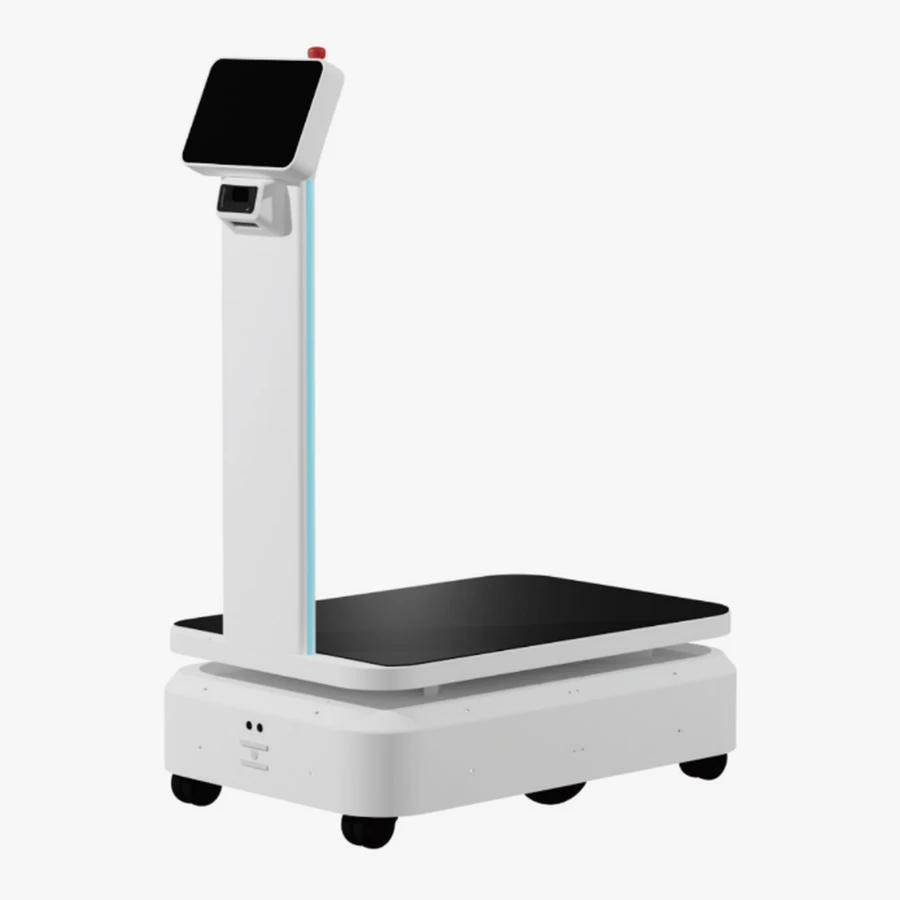
00Why it matters
Hospitals run the same delivery routes dozens of times a day: meals, linen, supplies. Automating them makes deliveries punctual and traceable, keeps clinical staff on clinical work, and reduces the number of people moving between wards.
01Patient meal delivery
Meal rounds are time-critical: food must arrive on time and still warm, often across several floors at once. A RoboServe 150 with four shelves carries trays for a whole bay in one trip, riding the service lift on its own. Ward staff collect at the nurses' station and serve the patients themselves, keeping the human touch where it matters.
02Clean linen restocking
A RoboServe 300 with a custom closed cabinet runs clean linen from the laundry to each floor's linen room on a fixed morning schedule. The cabinet keeps linen covered in transit and the schedule keeps shelves full before the day's admissions.
03Soiled linen collection, kept separate
Infection-control teams care most about one thing here: clean and soiled flows must never mix. Dedicate a separate robot (or a separately marked cabinet) to soiled linen, and set it to use a different lane and service lift where your building allows. Robots follow the rule every time, without shortcuts.
04Consumables and non-critical supplies
Gloves, dressings, stationery, IV stands and other non-critical supplies can move from central stores to wards on demand. Staff call the robot with a call button or tablet and get on with their work while it travels.
Controlled drugs and clinical samples have chain-of-custody requirements. If you want to automate these, discuss lockable custom cabinets and access procedures with us and your pharmacy and lab teams before deployment.
05Central stores and receiving
Behind the scenes, hospitals receive pallets of consumables, IV fluids and food stock every day. RoboLift moves those pallets, up to 2,000 kg, from the receiving dock to central stores without a forklift driver, and can take tasks from your inventory system.
06Night-shift support
At night, wards run with the fewest staff. A robot that can fetch an extra blanket, a meal for a late admission or supplies from the store means a nurse doesn't have to leave the ward. With a 12-hour runtime, one robot can cover the entire night shift.
07Where robots don't fit (yet)
- Clinical judgement: robots carry things; they don't assess patients.
- Emergency response: in a code situation, humans move faster and adapt better.
- Sterile zones: operating theatres and ICUs have their own protocols; keep robots to agreed routes outside them unless your infection-control team approves otherwise.
08Getting started
Begin with one high-volume, predictable route, usually meals or linen on a single floor. Measure staff time saved, then expand floor by floor. Our team handles the site survey, mapping, lift integration and training.
Want the technical deep dive on mapping, lifts and charging? Read Inside RoboServe. The same principles apply to hospitals.
Plan a pilot on one ward
Tell us about your floors, kitchens and stores. We'll propose a pilot route and the right robot mix.