01Luggage and bulk items
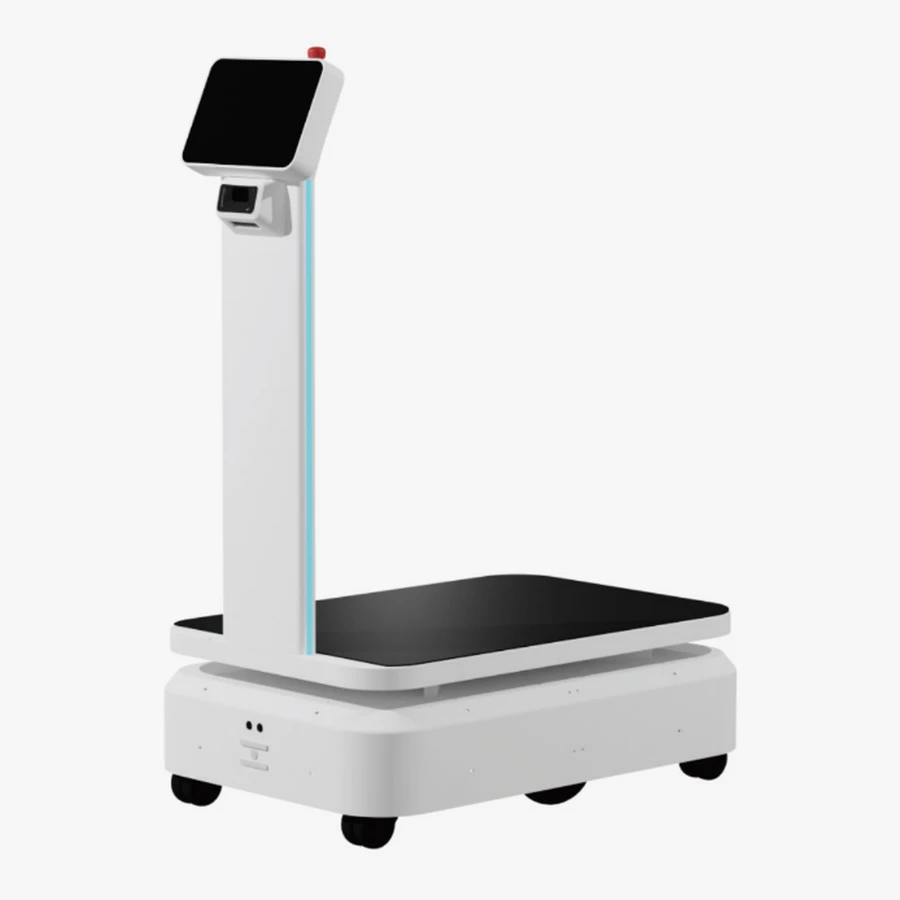
The RoboServe 300E has the largest deck in the range, 770 × 600 mm, and carries up to 300 kg. It's built for suitcases, equipment cases and bulk deliveries in staff areas: lost-and-found transfers, crew baggage, airport hotel bell desks and operational supplies. Its 80 cm minimum passage width lets it use standard back-of-house corridors.
02Premium lounges
In a business lounge, a RoboServe 80 or 150 brings food and drinks from the pantry to seating zones and returns empty plates. Hosts stay focused on passengers while the robot runs the service loop, and the robot itself becomes part of a premium, tech-forward experience.
03Flight catering units
Catering units move heavy pallets of ingredients, packaging and supplies between receiving, cold stores and production. RoboLift handles those 2,000 kg pallet moves automatically, around the clock and with self-charging, taking tasks from your production system.
04Retail and duty-free stock
Retail concessions replenish constantly from back-of-house stores. RoboServe 300 runs stock from the store room to the shop floor during quiet hours; RoboLift moves full pallets in the central retail warehouse.
05Cargo warehouses
Indoor cargo terminals are repetitive, high-volume pallet operations, the classic RoboLift use case: dock to staging, staging to storage, storage to build-up area. Map-based navigation means no floor tape to maintain in a high-traffic environment.
06Making it work in an airport
- Security first: deploy in staff and back-of-house areas, with routes agreed with airport security.
- Lifts and doors: optional integrations let robots move between levels and through automatic doors.
- Connectivity: 4G / Wi-Fi support for dispatch and monitoring across large footprints.
- Shift coverage: 12-hour RoboServe runtimes and self-charging RoboLift keep a fleet working 24/7.
- Start small: one lounge, one catering unit or one cargo flow, then scale what works.
Map your first robot route
Tell us which part of your airport operation moves the most, and we'll suggest where to start.